

Every Agency Says They Use AI Now. Here’s the Question That Separates Them.
Ask ten WordPress agencies whether they use AI and you’ll get ten yeses. The word covers an enormous range of practice, and almost none of it is visible from the outside.
At one end, someone on the team asks a chatbot for a block of code, pastes it into your site, and hopes it holds. At the other end, an agency has built a documented system where AI does the repetitive work inside rules the team defined, using your project’s actual standards, with a human reviewing everything before it reaches you.
Both of those get described as “we use AI.” Only one of them is a development process I’d trust.
If you’ve been quietly wondering whether you’re paying agency rates for work a machine did badly, that’s a fair question and you should ask it directly. Here’s how we’d answer it, and how to evaluate anyone else’s answer.
Agentic development, without the jargon
Most people’s experience of AI is a conversation. You ask, it answers, you copy the useful part. That’s chat. It’s genuinely helpful and it’s also where most teams have stopped.
Agentic development is delegation instead of conversation. You give the AI a job, not a question, and it carries out a defined process end to end. It reads the project files, follows the team’s documented standards, makes the changes, runs the tests, checks the result in a real browser, and hands back finished work for a person to review.
The distinction our Senior Frontend Engineer Alfredo Navas used on stage at WordCamp US this month is the one that makes it click, because it’s about people rather than technology.
When a talented developer joins your team, you don’t walk up on day one and say “build me a homepage.” You onboard them. You explain how this project is structured, which standards apply, what was decided two years ago and why, and how the team ships work. That developer might be excellent. They still don’t know any of that yet.
Most companies never do this with AI. They skip the onboarding entirely and then act surprised when the output doesn’t match the way the project works. As Alfredo put it:
The model knows WordPress. It doesn’t know your WordPress.
What WebDevStudios built instead
Three things have to exist before an AI can be trusted with real work on a client project.
The rules, written down. Every project we build carries a file that documents how that specific project works. Where things live, which standards apply, what the build process is, what must never be touched. It sits in the code, it’s version controlled, and it updates as the project does. Your project’s rules stop living in one person’s memory.
The process, documented. The way we build a custom block, run a migration, or ship an accessible component is written out as a repeatable procedure with its own checks and expected output. If we find ourselves explaining the same thing twice, it becomes documented process. That’s a discipline that makes the human work better too.
Controlled access to real systems. The AI can look at the design file, open the site in a browser, run the tests, and check the result. Deliberately scoped, deliberately limited. This is the layer most teams either skip, which leaves the AI guessing, or open far too wide, which is worse.
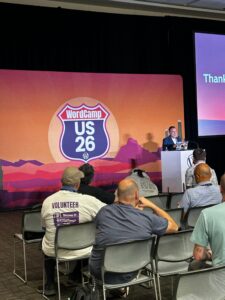
None of this is theoretical. Alfredo demonstrated it live in Phoenix. A design comp went in, and a fully functional, editable WordPress block came out a few minutes later, built to the project’s standards and tested in a real browser before a human ever looked at it.
What that means for your project
Speed that doesn’t come out of quality. The time savings land on the repetitive work, which is where they should. Nobody’s rushing your architecture decisions or your content strategy. They’re compressing the third variation of a component that follows a pattern we already established.
Your project’s knowledge stays with your project. This is the one that matters most over a multi-year relationship and it’s the one nobody talks about. When agencies rotate people, context evaporates. The developer who understood why your custom post type works the way it does moves on, and six months later someone is guessing. When the rules live in the repository, the next person and the next tool both inherit them.
Standards get enforced rather than remembered. Accessibility is the clearest example. In Alfredo’s demo, “produce semantic and accessible markup” wasn’t something he hoped the AI would remember. It was written into the project’s rules, so every component built under those rules starts there. The same applies to performance budgets, coding standards, and the editorial patterns your content team relies on. Consistency stops depending on whether someone was having a good day.
Your budget goes toward judgment. You’re not paying us to type faster. You’re paying for architecture decisions, editorial workflow that your team can actually use, security posture, and the accumulated experience of eighteen years of WordPress projects. Everything that’s genuinely repetitive should cost less, and that’s the point.
What doesn’t change
A person is accountable for everything that reaches you.
The task starts with a human. The AI executes a process our team defined. Then our developers review the output, our QA checks quality and user experience, and the people who designed your site still own how it looks and behaves. Nothing ships because a machine said it was finished.
We’re specific about this because the failure mode is real. In the question period after Alfredo’s talk, an attendee described an AI skipping two steps in a seven-step process and cheerfully admitting it when asked. That happens. It’s exactly why review is a person’s job and why we’re not interested in pretending otherwise.
You’ll also still be talking to the people building your site. That doesn’t change either.
Why we’re in a position to say this
Alfredo presented “Agentic Development for WordPress” on the Technical WordPress track at WordCamp US 2026 in Phoenix, the largest WordPress event in the United States, to a full room.
Our Co-founder, Brad Williams, built a custom WordPress Abilities API plugin and integrated with the WordPress MCP Adapter, which is the open source project that lets AI assistants connect directly to a WordPress site and work with live content instead of copy and paste. Very few agencies are contributing the tooling here rather than reading about it.
WebDevStudios has been WordPress-exclusive since 2008 and has built platforms for Microsoft, Starbucks, the NBA, and Cisco. We know what holds up under real traffic and real security review. That’s the standard we hold all of our work to.
Five questions worth asking any agency
Use these on us. Use them on whoever else you’re considering.
- Where do this project’s rules and standards live, and can I see them?
- What does a person review before anything reaches me?
- Which parts of the process are AI-assisted, and which are not?
- What happens to my project’s knowledge when a team member leaves?
- How do you make sure accessibility and performance standards are met on every component, not just the first one?
An agency doing this well will answer all five without hesitating. An agency that’s improvising will get vague around question two.
The technical version
If you have a developer or technical lead who wants the full detail, Alfredo’s WordCamp US talk is below. It’s built for engineers and it goes deep on how the system is assembled.
If you’d rather talk about what this means for a project you’re planning, get in touch! You’ll meet with the same talented team that will build your new website!
Make sure to check out Alfredo’s full presentation from WordCamp US: